Showing posts with label iraq War. Show all posts

Monday, May 27, 2013

Freedom is never free.

I am not in the habit of re-posting but please forgive me this Memorial Day. This is a post I wrote last year  and I want to honor these men I served with and all those who are never recognized for their ultimate sacrifice. 

This Memorial Day weekend we remember those who have died for our country. Many times we hear about the number of fallen troops in the history of our country but seldom do we put faces to those who have given all for our freedom. I am doing something I have never done before now, I am writing about some of those men who I am proud to have served with.
   Early during the Iraq War (2003-2004) I was deployed to Iraq with a Seabee unit, which is basically a Combat Engineer group for the Navy and Marine Corp. We were originally tasked with bridge, road and runway repair and construction but this was early in the war and the battle of Fallujah was raging in the Sunni Triangle and needless to say it was a bad neighborhood. Our battalion was attached to the MEG (Marine Engineer Group) and the MEF (Marine Expeditionary Force) and we were split up into smaller units / squads to work in convoy operations, base defense, force protection etc. I was first assigned to a Special Ops base North of Baghdad, working on force protection in a FOB (forward operating base) It was a lot of closely guarded ops and to this day if I pull the compound up on Google Earth the area is blurred out. Later our unit was sent to Ramadi to work with the MEG.
As I said earlier, in 2004 Anbar province was a bad area and little did we realize that when we boarded that DC-10 in Gulfport Mississippi that 7 of us on that one aircraft would not return alive. Apart from the seven KIA there were others of us to return in wheel chairs, stretchers or on crutches. Some of us had visible wounds and some not so visible but without a doubt we were all forever marked by our service.

On this Memorial Day weekend I will offer no details but rather honor to the seven men in my unit who made the ultimate sacrifice.


KIA when his vehicle was hit by an IED, Anbar province, Iraq. 
33 years old, survived by wife and children.


EO2 Trace W. Dossett

Orlando, FL.
KIA,  hostile fire in Anbar province, Iraq.

37 years old survived by wife and 2 daughters. 


SW3 Ronald A. Ginther

Auburndale, FL.

KIA as a result of hostile fire in Anbar province, Iraq.
37 years old survived by wife and 2 children

BU2 Michael C. Anderson

Daytona, FL.

KIA as a result of hostile fire in Anbar province, Iraq.
36 years old, survived by wife and daughter.


BU2 Robert B. Jenkins

Stuart, FL.
Died as a result of hostile fire in Anbar province, Iraq.
35 years old, survived by wife.


SW2 Jason B. Dwelley

Apopka, FL.

KIA when his vehicle was hit by an IED, Anbar province, Iraq.
31 years old.


CM3 Scott R. McHugh

Boca Raton, FL.

KIA as a result of hostile fire in Anbar province, Iraq.
Died 3 days past his 33rd birthday. His mother's care 
package had not arrived before he was killed.


"When I die, I desire no better winding sheet than the Stars and Stripes, and no softer pillow than the Constitution of my country." -- Andrew Johnson

Friday, October 21, 2011

Trucks in the Desert

Yesterday,  I mentioned about the old Viet Nam era truck we used for a while in Iraq.
One of the state of the art vehicles we had was the MTVR (Medium Tactical Vehicle Replacement) shown here. Don't ask me how the military comes up with the names. This one was one of our convoy trucks, We called it the BFT (Big, I forget what the 'F' stood for Truck) Notice the door is ballistic protected and comes up to head level. They were made by Oshkosh, I guess the same company which makes little kids cloths


They were very fast trucks, all wheel drive, automatic transmission, and even had compressors to inflate tires while it was moving so a bullet would not cause a flat, air would be continuously fed to the wheel although once it stopped it would resemble this. Notice this truck has taken fragments to the drivers door as well. We also had them with heavy guns attached and turrets on top.
We also used 'civilian' model trucks this one an International which had to be hardened for convoy use, thus the Kevlar panel on the door. Inside the door was a welded steel plate which covered your torso while seated, it did not hinge with the door so it was very hard to get in and out, especially with 75 lbs of 'battle rattle' and forget about doing it fast. You notice most of our vehicles had battle damage like the windshield here. 


Another Heavy Hauler by Oshkosh, notice door again. Also see the lifting eyes and towing points through the hood ad well as on the bumper. All of our vehicles had tow points like this. In case of any vehicle being incapacitated for any reason we would quickly hook to it and drag it back to base camp to keep the Hajji's from getting their hands on it and salvaging stuff to attack us with.  On the big vehicles the brakes would lock and they would be dragged with wheels skidding even to the point of wearing the rims down to the axle.
'Duke' with trusty M16

Case in point, Me standing in front of this convoy truck which was dragged smoking and burning back to Ramadi and left on the outskirts of the compound. As you can imagine there was a lot of heat build up dragging 50,000 lbs of scrap iron down a highway as fast as you could, quite a show to say the least. Not much worth salvaging from this vehicle.

Friday, October 14, 2011

Night Flight , Baghdad International.

When I was in Iraq I flew on a few of these C-130 flights, always in the back and I can promise you it was a ride of a lifetime. I received this from one of the guys in my unit. This is from a colorful writer from the 1st Marine Aircraft Wing based at  MCAS Miramar. The guy ought to write for a living..... he is my nominee  for  "Best of the Month." 
 VERY GOOD READ.


There I was at 6,000 feet over central Iraq, two hundred eighty knots and  we're dropping faster than Paris Hilton's panties. It's a typical  September  evening in the Persian Gulf; hotter than a rectal thermometer, and I'm  sweating like a priest at a Cub Scout meeting. But that's neither here nor  there. The night is moonless over Baghdad and blacker than a Steven King  novel. But it's 2004, folks, and I'm sporting the latest in night-combat  technology - namely, hand-me-down night vision goggles (NVGs) thrown out  by  the fighter boys. 
Additionally, my 1962 Lockheed C-130E Hercules is equipped with an  obsolete,  yet, semi-effective missile warning system (MWS). The MWS conveniently  makes  a nice soothing tone in your headset just before the missile explodes into  your airplane. Who says you can't polish a turd? 
At any rate, the NVGs are illuminating Baghdad International Airport like  the  Las Vegas Strip during a Mike Tyson fight. These NVGs are the cat's a$$.  But  I've digressed. The preferred method of approach tonight is the random  shallow. This tactical maneuver allows the pilot to ingress the landing  zone  in an unpredictable manner, thus exploiting the supposedly secured  perimeter  of the airfield in an attempt to avoid enemy surface-to-air missiles and  small arms fire. Personally, I wouldn't bet my pink a$$ on that theory,  but  the approach is fun as hell and that's the real reason we fly it. 
We get a visual on the runway at 3 miles out, drop down to 1,000 feet  above  the ground, still maintaining two hundred eighty knots. Now the fun  starts.  It's pilot appreciation time as I descend the mighty Herk to 600 feet and  smoothly, yet very deliberately, yank into a sixty degree left bank,  turning  the aircraft ninety degrees offset from runway heading. As soon as we roll  out of the turn, I reverse turn to the right a full two hundred seventy  degrees in order to roll out aligned with the runway. Some aeronautical  genius coined this maneuver the "Ninety/Two- Seventy." Chopping the power  during the turn, I pull back on the yoke just to the point my nether  regions  start to sag, bleeding off energy in order to configure the pig for  landing..  "Flaps Fifty!, Landing Gear Down!, Before Landing Checklist!" I look over  at  the copilot and he's shaking like a cat s*#tting on a sheet of ice.  Looking  further back at the navigator, and even through the NVGs, I can clearly  see  the wet spot spreading around his crotch. Finally, I glance at my  steely-eyed  flight engineer. His eyebrows rise in unison as a grin forms on his face.  I  can tell he's thinking the same thing I am.... "Where do we find such fine  young men?" 
"Flaps One Hundred!" I bark at the shaking cat. Now it's all aim-point and  airspeed. Aviation 101, with the exception there are no lights, I'm on  NVGs,  it's Baghdad, and now tracers are starting to crisscross the black sky.  Naturally, and not at all surprisingly, I grease the Goodyear's on  brick-one  of runway 33 left, bring the throttles to ground idle and then force the  props to full reverse pitch. Tonight, the sound of freedom is my four  Hamilton Standard propellers chewing through the thick, putrid, Baghdad  air.  The huge, one hundred thirty thousand pound, lumbering whisper pig comes  to a  lurching stop in less than two thousand feet. Let's see a Viper do that! 
We exit the runway to a welcoming committee of government issued Army  grunts.  It's time to download their beans and bullets and letters from their  sweethearts, look for war booty, and of course, urinate on Saddam's home.  Walking down the crew entry steps with my lowest-bidder, Beretta 92F, 9  millimeter strapped smartly to my side, look around and thank God, not  Allah,  I'm an American and I'm on the winning team. Then I thank God I'm not in  the  Army. Knowing once again I've cheated death, I ask myself, "What in the  hell  am I doing in this mess?" Is it Duty, Honor, and Country? You bet your  a$$.  Or could it possibly be for the glory, the swag, and not to mention,  chicks  dig the Air Medal. There's probably some truth there too. But now is not  the  time to derive the complexities of the superior, cerebral properties of  the  human portion of the aviator-man-machine model. It is however, time to get  out of this s#*t-hole. Hey copilot , clean yourself up! And how's 'bout  the  'Before Starting Engines Checklist." 
God, I love this job!"


Thursday, October 13, 2011

BOL Protection


When we were in the sand box we had a neat system of  blast protection that might be useful to know about in case of future emergency's, they were called Hesco Barriers.
Hesco is a brand name, the pallets you see here contain 6 barriers. They are basically a welded wire mesh lined with a filter type fabric which when folded out can be filled with earth. The common size we used were about 3'X3' and 5' tall. we also saw 2'X2' X 4' tall (approx) Interesting note, each of these bundles you see here had a full size LeatherMan tool with pouch inside the bundle to assemble them with.
The Leatherman tools were highly sought after and were often removed before we got to assemble them. I did get one myself only after going through several newly arrived bundles. These Hesco barriers were made in Germany I think and I am sure the Government paid a premium for them. I used to think some times how neat they would be to build a wall around a BOL or any area you wanted to protect with these or homemade ones and plant vines and or shrubs on and around them to hide and beautify them. These you see here would stop any small arms fire you would encounter as well as blast protection and provide a good secure wall especially if thorny type shrubs were planted on them. In the third picture you see them around tents. We would put them around and between tents to minimize damage in mortar attacks, if a round landed in one tent while deadly to those inside the next tent would be protected. They have 4 sides and a bottom, the top is open. They could be made with 2"X4" welded wire mesh available at hardware stores and lined with a filter cloth also available at hardware stores. These we had were attached together with hog rings so you could do the same. These came in a larger size which was about 4'X4' X 6' tall (actually the ones around the tents are this size) as well so you see there is many options as to the size. The are very stable when filled and if they had vegetation planted on them the roots would hold them together indefinitely however after years in the desert sun and heat these seem to hold up very well.


 These last 3 pictures, taken off web.


Friday, October 7, 2011

A Day Down Range (part 3)

As a continuing series here is part 3 of a day down range.
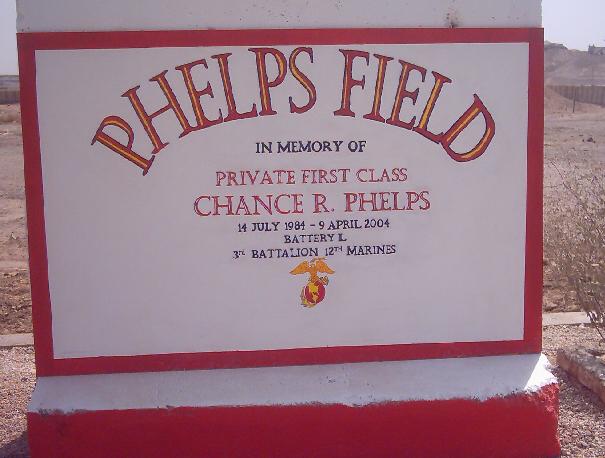
Troops like to do activities which take their mind off the stress of combat. Shown here is a group playing baseball. Some of the Marines had painted one of the concrete blast barriers around the field in honor of a fallen comrade.

Note town in background is Ramadi......very bad place. Also note kneeling guy in right of picture, the concrete culvert behind where his head is, this is a concrete culvert used as a bunker during attacks (which happened often) These were found all around base camps. We had one poor guy the last week we were in country slept in one of these to ensure he went home in one piece.


 In between missions or convoys we would sometimes grab a quick nap especially if you had been up all night and had to go back out with no rest.
These 2 pictures I took from a second story porch on a building which housed our Headquarters. The convoy commander was receiving a debrief  and new mission assignment while the rest of the squad grabbed a little much needed rest.


 I had written in an earlier blog about mortar and rocket attacks. Here is a picture of out internet center with a chunk of concrete blown from the eve. No one was seriously injured from this blast but I can tell you from experience it will shake you up if you are inside when this happens.
Hummer hit by RPG


Kind of ugly mess.

Tuesday, October 4, 2011

A Day Down Range (part 2)

Some of you seemed to enjoy my first post of candid shots and little tid-bits of info about life in the desert so I decided to add another episode.

In the first post I wrote about the Hummers we had to 'battle harden' we never did phase those out before I left however the new ones we saw were more like this. The glass in these was about 3" thick, bullet proof. I never had the benefit of the new model's
 
Hair Cut Day, in the heat you wanted a 'high & tight' so we did out own.
Here one of our guys was giving one of our radio operators a haircut


 Church services were well attended. It was interesting to see all the M-16's and light machine guns under the benches where we sat (if you were assigned a SAW or M-60 for example you carried it with you)
Pictured here is a young Marine being baptized (after services) by the Chaplains, in a box lined with plastic.


 Laundry was either handled in the shower (which was about half the time with me) or at a setup like this. The bladder you see was filled by a tank truck with river water and was used in the washing machine shown just behind in the shadows The water got very hot in the sun. Clothes wrung out by hand dried fully in about 15-20 min after being hung out.                                       
 The first camp I was at had laundry provided by private contracted Philippine women. After it was hit by a rocket and five of them killed the remaining women left and we did our own wash.


Friday, September 30, 2011

A Day Down Range

You probably see a lot of news about the war in the middle east and the coverage usually centers on the big picture so I thought I would show a few pictures of every day life and the little things which go unnoticed in the media. The picture to the right is of one of our .50 cal's with a small silly looking bird attached to the night vision scope. Some of the troops would have little toys like this and would put them in pictures to send home for their kids to see. Most of the time it was a toy which belonged to their child. I guess this gave some connection to home and vise versa                                
When we first arrived in country (very early stage of the war) the vehicles were not well armored, no bullet proof glass or ballistic pannels. This proved deadly so we engineered our own "hardening" from any scrap we could find. most looked like this. We welded panels over the doors and top and bottom of windshield. What you can't see is the 1/2 or 3/8 steel plates under the seats, by the time we finished a 6,000 lb Hummer weighed over 10,000 lbs. but hey it worked. Note double steel panels on doors, the first sheet of steel would deform the bullet and it would have a harder time penetrating the second sheet, there was about a one inch gap between them.

 When we were on convoys we would have to radio in reports at certain checkpoints to give status updates on things like ammo, fuel or if we had enemy engagement or medical evac. etc. These reports had acronyms to go by like LACE or SALUTE etc. some radio operators would write the format out on the inside of the windshield in grease pencil, this allowed them to call in reports without looking down at notes which was also a big help at night because we traveled totally blacked out using only NVG's but they could still be read.

 Many times when we moved about we carried interpreters with us and we knew from experience they could not be trusted  because we learned the hard way they might leak convoy plans to the enemy so we would keep them in their own tents and they would not be privy to any planning. Thus the need for this sign on  the outside of out "internet cafe" and phone center. There were no cell phones of any kind allowed in any camp. Some units used satellite phones but they were strictly controlled.


Wednesday, September 21, 2011

Offensive Driving

Thought you might find this interesting. I did not take this video but it is the way we had to drive in Iraq (at least in 2003-04) You never stopped for anything, keep moving at all costs. Bridges were the worst, we were always a target and we had the bullet holes to prove it. Something to keep in the back of your head if you find yourself in a bug out situation.
Also note: we had heavy duty bumpers and no seat belts. The last thing you wanted if you had to fight or bail out was a seat belt to contend with.

Thursday, September 8, 2011

Iraqis don't read Czechoslovakian

In life we often find ourselves in places we don't like. Iraq was one of those. One of the constant threats over there was incoming rocket and mortar fire. The bright side was (and trust me we needed a bright side) was about half of the ordnance failed to explode.
One Sunday morning I was shaving at the water buffalo you see here, (I always shaved and cleaned my M-16 for church services)  when over the sound of generators I heard several  muffled booms in the distance, it is amazing how keen your sense of hearing can be over all that noise, I waited and listened for a second or two and heard several rockets streak just a few feet over my head and saw plumes of dust as they landed in the berm you see behind the water buffalo (water tank on wheels)
 11 Czechoslovakian made rockets had impacted just a few yards from my location and failed to explode.
There was was always several reasons this would happen the first one being Iraqis don't read Czechoslovakian. You see all the writing on the rockets was Czechoslovakian and therefore they could not understand the directions on how to arm the rockets. 
Shown here are one of the rockets dug out of the ground, believe me they can make a big boom, you notice there was no reason to wear blast suits when removing these because........well it was kind of pointless. I guess the Good Lord was watching over me.
 Another threat was mortar rounds, these also had a high rate of failure thus the second reason, Al-Qaeda got their mortar training from the Wiley Coyote, Road Runner cartoons. A lot of the time they did not have guns to fire the mortars so they would devise other methods to fire them. I have seen a few of these setups and they look like cartoon contraptions.

Being trained on mortars I know they have to rotate very quickly several times  as they leave the "tube" to be armed and makeshift firing mechanisms did not always do this. 
Below is a picture I took of a un-exploded mortar round near our showers.
Of course the down side is half the time they would explode and reek all kinds destruction but I will save some of those stories for another day.


Wednesday, August 31, 2011

Donkeys in the Desert

 Donkeys are cute animals although stubborn (kind of like me I guess) but if you pay them attention they are like a big dog and will follow you around and beg for attention. When I was in Iraq in 2004 I spent a few months based out of Ramadi. The compound we worked out of was next to the town, very bad place by the way and all that separated us from town was a fence/wall and guard towers. Donkeys would wander into the camp each afternoon. This used to bother me somewhat because the Army was in control of the perimeter at that time and did not want the donkeys in camp for various reasons and would round them up each day and heard them out, so I used to wonder if the fence was so secure donkeys could wander in at will without apparent detection what would stop the enemy from doing so, anyway this was life.

Iraqi people are not generally animal lovers and treat all animals as work animals or pests. Americans on the other hand like their animals especially US troops who are looking for any reminder of normal life in a combat area.
Pictured left here is 3 donkeys near our chow hall, the 2 in the back are light colored and harder to see.


Yours truly at right, with a donkey (another behind me begging for attention) near our hooch right at dark.


 Donkey trying to find some more treats. Corpsman (medic) in left of picture threatening to shoot donkey with 9mm pistol if he did not get away. He thought they carried disease.


Most troops were kind to donkeys and would feed them candy and give them a drink, the donkeys figured this out fairly quick and although they were rounded up and and sent "home" each night they always returned back to camp. (as seen in last picture)
One afternoon one young Marine took red spray paint painted a big "USMC" on the side of a light colored donkey. We never saw that donkey again although his friends returned each day.